 Exchange CellularYour Mobile Gateway to Digital Assets.
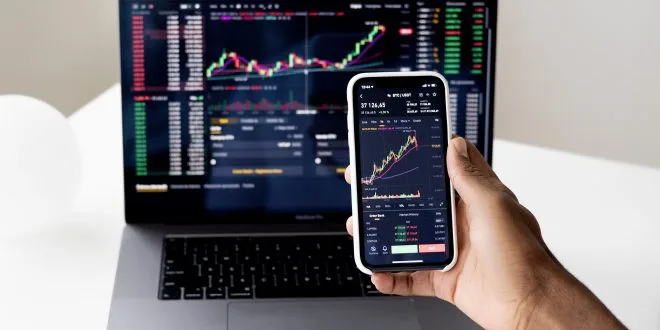
The 2026 Landscape of Retail Investment and the Proliferation of Mobile Trading Scams
In the current financial environment, the democratization of capital markets has reached an unprecedented peak. With over 65% of European retail trades now executed via smartphone applications, the barrier to entry for sophisticated financial instruments—ranging from leveraged CFDs to tokenized real estate—has vanished. However, this accessibility has birthed a sophisticated shadow industry. As Silas ‘The Stack’ Varrick, I have observed that while the house usually wins in a fair game, in the realm of Mobile Trading Scams: How to Spot and Avoid Them (Evie’s Advice), the game is often rigged before the first hand is dealt. Data from the first quarter indicates that fraudulent trading platforms have siphoned off an estimated €2.4 billion from retail investors globally, a 14% increase from the 2025 fiscal year.
At Exchange Cellular, we recognize that your mobile gateway to digital assets must be fortified not just by software, but by financial literacy. The psychological hook used by modern scammers often exploits the “fear of missing out” (FOMO) regarding high-yield digital assets. By understanding the mechanics of these fraudulent schemes, investors can move from being “suckers” at the table to calculated risk-takers who know how to protect their principal capital.
Regulatory Frameworks and the Anatomy of Fraudulent Intermediaries
The legal landscape has tightened, yet scammers continue to operate in the jurisdictional “gray zones.” Under the MiCA II (Markets in Crypto-Assets) regulations and the updated MiFID III directives implemented late in 2025, any entity offering trading services to EU residents must possess a valid license from a national regulator like the AMF in France or the BaFin in Germany. Mobile trading scams often bypass these requirements by utilizing “mirror sites” or offshore registrations in jurisdictions with lax oversight.
Psychologically, these scams leverage the “authority bias.” A fraudulent app may display a fake license number or a spoofed endorsement from a regulatory body. Currently, the sophistication of deepfake technology has allowed scammers to create realistic video testimonials of “successful investors” or even fake interviews with financial journalists. The tax implications for victims are equally harrowing; while legitimate capital losses can often be offset against gains under the French Flat Tax (Prélèvement Forfaitaire Unique – PFU), losses incurred through verified fraud are significantly more complex to declare and often require a formal criminal complaint to even be considered by tax authorities.
Technological Red Flags in Mobile Interfaces
Modern fintech has streamlined management times to mere seconds, but this speed is a double-edged sword. Fraudulent apps often feature “slippage manipulation,” where the price shown at the time of the “tap” is intentionally altered to ensure the trade enters at a loss. Furthermore, many of these platforms use proprietary “trading engines” that are not connected to any real liquidity providers or central limit order books (CLOB). They are essentially closed-loop simulations designed to drain the user’s deposit through artificial volatility.
Comparative Analysis: Legitimate Vehicles vs. Fraudulent Schemes
To navigate the market, one must distinguish between high-risk legitimate investments and outright theft. The following table outlines the key differences between regulated mobile trading and the common characteristics found in Mobile Trading Scams: How to Spot and Avoid Them (Evie’s Advice).
| Feature | Regulated Broker | Typical Mobile Scam | Risk Level |
|---|---|---|---|
| Average Annual Yield | 4% – 12% (Market dependent) | “Guaranteed” 1% daily or 300% yearly | Extreme / Total Loss |
| Withdrawal Time | T+1 to T+3 Business Days | Indefinite (Requires “Tax” payment first) | Liquidity Trap |
| Regulatory Oversight | AMF, FCA, SEC, CySEC | None or Falsified (Offshore) | Legal Nullity |
| Tax Reporting | Automatic IFU or API export | Non-existent / Hidden accounts | Compliance Risk |
Investor Pitfalls: Psychological Biases in the Digital Age
Even seasoned investors fall prey to cognitive errors when a mobile interface is designed to trigger dopamine responses. Currently, we see three primary pitfalls that lead users directly into the hands of scammers.
- The Recency Bias of “Moonshots”: Following the crypto surges of 2024 and 2025, many investors believe that triple-digit returns are the baseline. Scammers exploit this by promising “the next big token” available only on their proprietary app.
- Underestimating Hidden Transaction Friction: While legitimate platforms are transparent about their 0.1% spread, scams often hide massive “exit fees” or “liquidity provider taxes” that only appear when a user attempts to withdraw funds.
- Overconfidence in “AI-Driven” Signals: The market is flooded with “AI Trading Bots.” Scammers capitalize on the AI hype by offering mobile apps that claim to use proprietary algorithms to guarantee wins. In reality, these are often simple scripts designed to show fake profits to encourage larger deposits.
“In the market, as in poker, if you can’t spot the mark within the first thirty minutes at the table, you are the mark. A mobile app that promises safety while delivering impossible returns is simply a high-tech shell game.” — Silas ‘The Stack’ Varrick
Technical Analysis of Subscription and Withdrawal Tactics
How can I verify if a mobile trading app is legally compliant?
The first step is to consult the official “White List” of the relevant regulatory authority (e.g., the AMF’s REGAFI register in France). Cross-reference the application’s provider name with the registered legal entity. Currently, legitimate apps are also required to provide a Key Information Document (KID) for each complex financial product offered. If the app provides no KID or uses vague terminology regarding the underlying asset, it is a significant red flag.
What are the tax implications of funds lost to a mobile scam?
Under current tax codes, capital losses are generally deductible only when realized on regulated exchanges. If you are a victim of a scam, the “loss” is often classified as a theft rather than a capital loss. To potentially claim this against your taxable income, you must provide a “dépôt de plainte” (official police complaint) and evidence that the intermediary was fraudulent. We recommend consulting a tax lawyer, as the recovery of the 30% PFU on other gains using these losses is subject to strict scrutiny by the Direction Générale des Finances Publiques (DGFiP).
What is the “Recovery Scam” and how does it target previous victims?
This is a secondary fraud prevalent. Once an investor has been scammed, their data is sold on the dark web. A “recovery agent” or “legal expert” (often claiming to be from a government body) contacts the victim, promising to retrieve the lost funds for an upfront fee or “blockchain gas fee.” Legitimate recovery processes through banks or regulators never require an upfront payment to a private individual via crypto or wire transfer.
Conclusion for Secure Mobile Investing
To thrive in the financial ecosystem, investors must adopt a “Zero Trust” posture toward unsolicited mobile investment opportunities. We recommend the following priority actions:
- Verify Before Deposit: Never fund an account until you have verified the broker’s license on the official regulator’s website. If they claim to be licensed in a tax haven, proceed with extreme caution.
- Test the Exit: Perform a small “test withdrawal” of your initial capital before committing larger sums. If the platform creates hurdles for a €100 withdrawal, they will certainly block a €10,000 one.
- Enable Multi-Factor Authentication (MFA): Ensure the app uses hardware-based or biometric MFA. Scammers often use “SIM swapping” or phishing to gain access to accounts that lack robust security layers.
- Document Everything: Keep logs of all communications, transaction hashes, and terms of service. In the event of a dispute, this documentation is vital for legal recourse.
The information presented in this article is for educational and market analysis purposes only and does not constitute financial, investment, or tax advice. The volatile nature of digital assets and capital markets involves significant risk of loss. Investors should conduct their own due diligence and consult with a certified financial advisor or legal professional before engaging in any trading activity or utilizing mobile investment platforms.



The focus on offshore registrations is a key red flag for mobile trading apps.
Bonjour Amélie Dubois, you’ve hit on a really critical point there. Offshore registrations are almost always a massive red flag in my experience, especially when dealing with smaller, less-known apps. It’s like they’re intentionally trying to avoid accountability. I’ve seen countless cases where these ‘offshore’ entities suddenly vanish, taking client funds with them, and there’s virtually no recourse.
Yo, content de voir ce sujet abordé ! Franchement, la section sur les ‘mirror sites’ et les enregistrements offshore, c’est super pertinent. J’ai un pote qui s’est fait avoir comme ça l’année dernière, pensant être sur une plateforme régulée alors que c’était juste un site qui copiait tout à l’identique. Ça montre bien à quel point il faut être vigilant et vérifier les licences directement sur les sites des régulateurs comme l’AMF ou la BaFin, pas juste faire confiance à ce qui est affiché dans l’appli.
Le coup de l’autorité bias avec les deepfakes, c’est carrément flippant aussi. On voit de plus en plus de trucs hyper réalistes, ça devient vraiment difficile de distinguer le vrai du faux. Votre article met bien le doigt sur l’importance de la littératie financière, c’est la seule vraie défense qu’on ait contre ces arnaques de plus en plus sophistiquées. C’est un rappel crucial pour tous ceux qui se lancent dans le trading mobile.
Bonjour à tous! This is such a timely post. I’ve been seeing so many ads lately for platforms promising huge returns, and the
Hey, this article hits home for sure. I’ve seen so many new traders fall for those ‘too good to be true’ offers, especially with the hype around new tokens. The bit about mirror sites and fake endorsements is spot on – it’s scary how convincing they can make things look these days. It really underscores why due diligence is non-negotiable before putting any capital down.
Hey tout le monde, je suis tellement content de voir ce sujet abordé ici ! Franchement, la sécurité sur mobile, c’est devenu ma priorité absolue après avoir failli me faire piéger l’année dernière. Ce que j’adore avec des plateformes sérieuses, c’est la tranquillité d’esprit qu’elles offrent. Je me souviens d’avoir testé une nouvelle app de trading de crypto qui promettait des rendements de fou, et tout me semblait louche, surtout l’interface qui était un peu trop simpliste pour être honnête. Le fait qu’il n’y ait pas de vérification KYC approfondie m’a mis la puce à l’oreille. C’est vrai que la FOMO est un piège énorme, surtout quand on voit les prix flamber, mais prendre le temps de vérifier les licences et la réputation d’une app, ça paye toujours. J’ai eu de la chance de m’en rendre compte avant d’engager des fonds. Maintenant, je ne jure que par les apps qui ont un support client réactif et transparent, et surtout, qui sont clairement régulées. C’est la base pour éviter les mauvaises surprises.
Super article, ça donne vraiment matière à réfléchir sur la sécurité mobile !
Bonjour à tous ! Je suis tombé sur ce post au bon moment. J’ai été agréablement surpris par la clarté et la pertinence des conseils. Merci pour les informations utiles !
Bonjour à tous! Super article, vraiment. Je me demandais si la
Okay, but what happens when markets get super volatile, like during a sudden crash or huge pump? Do these tips still apply, or do scammers adapt too quickly?
Hey, this article hit home! It’s so easy to get caught up in the hype, especially with the ‘fear of missing out’ driving so much in crypto. I’ve always been super cautious about checking licenses and regulations, but the point about ‘mirror sites’ and fake endorsements is a real eye-opener. It just shows how crucial it is to double-check every single detail, even when you think you’re being careful. Thanks for the heads-up on the deepfake tech too, that’s genuinely scary how advanced these scammers are getting.